Mississippi Sprouts: Growing Farm to ECE
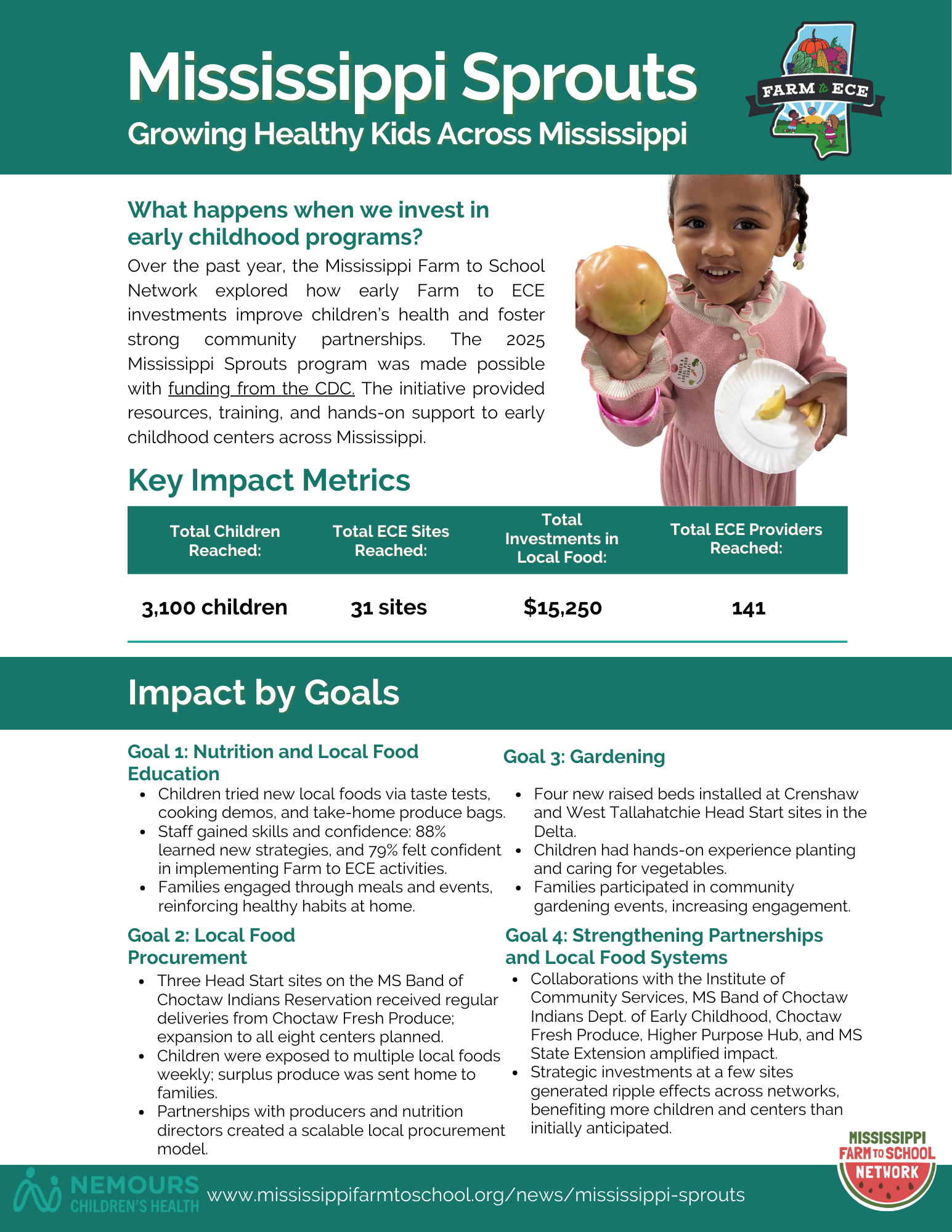
With support from the CDC-funded Healthy Kids, Healthy Future Technical Assistance Program, led by Nemours Children’s Health, in partnership with the Association of State Public Health Nutritionists, the 2025 Mississippi Sprouts pilot explored how early investments in Farm to Early Care and Education programs impact young children’s future health, and how building reciprocal community relationships strengthen that work.
Beginning April 2025, the Mississippi Farm to School Network (MFSN) facilitated the Mississippi Sprouts pilot, a Farm to Early Care and Education (Farm to ECE) Springboard Opportunity made possible through funding from the Nemours Children’s Healthy Kids, Healthy Future Technical Assistance Program. With this support, MFSN provided implementation funds, training, resources, and technical assistance to several Mississippi early childhood programs ready to connect children with nourishing, local food.
At first, Mississippi Sprouts focused on five individual ECE programs to test what worked. Over time, those sites introduced us to their trusted local networks, including Head Start systems, tribal programs, farmers, and health partners. Honoring these relationships allowed Mississippi Sprouts to reach far more ECE programs, farmers, and community partners than originally planned.
What Is Farm to ECE?
Farm to ECE brings local food and farming into early childhood learning through three main pillars:
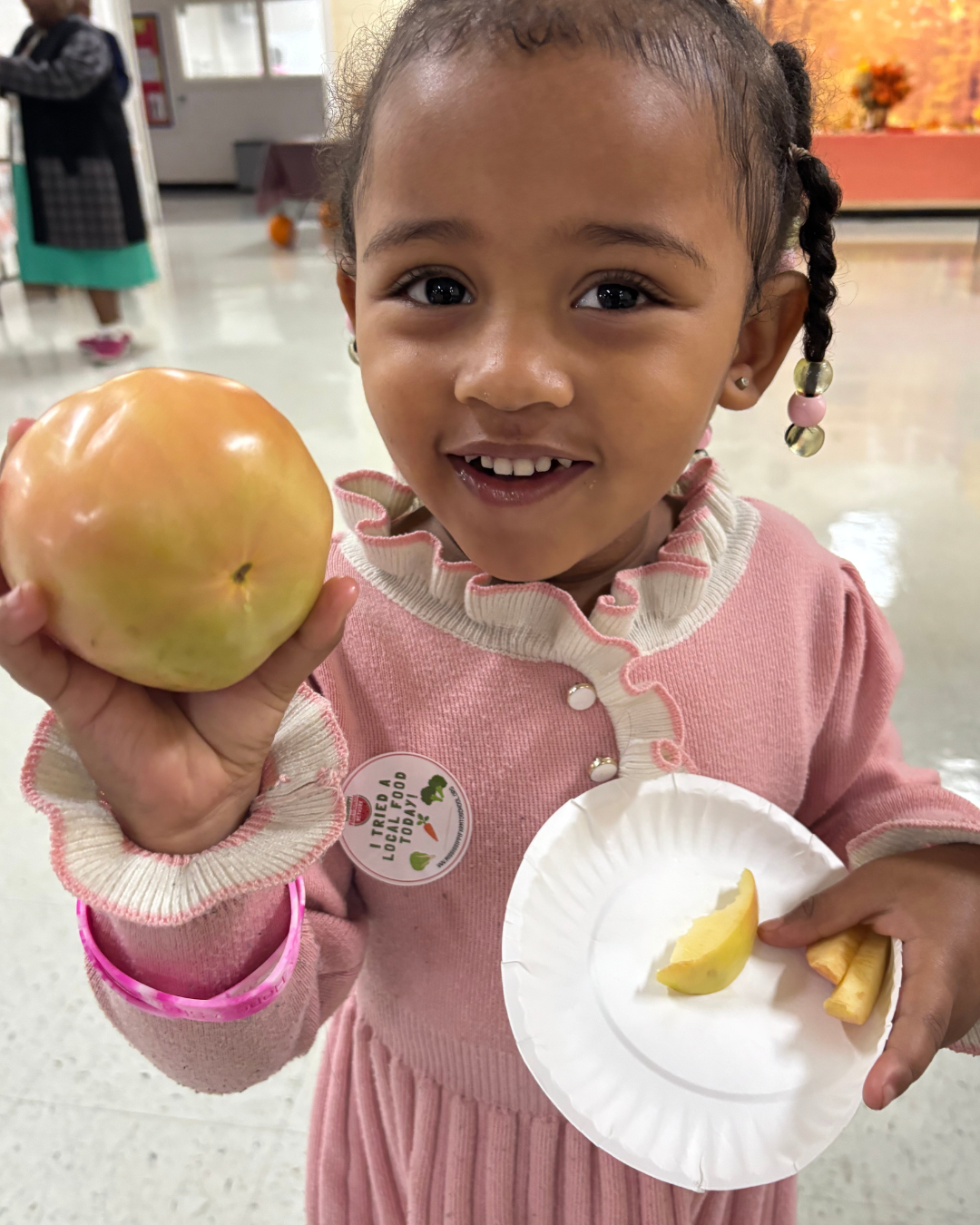
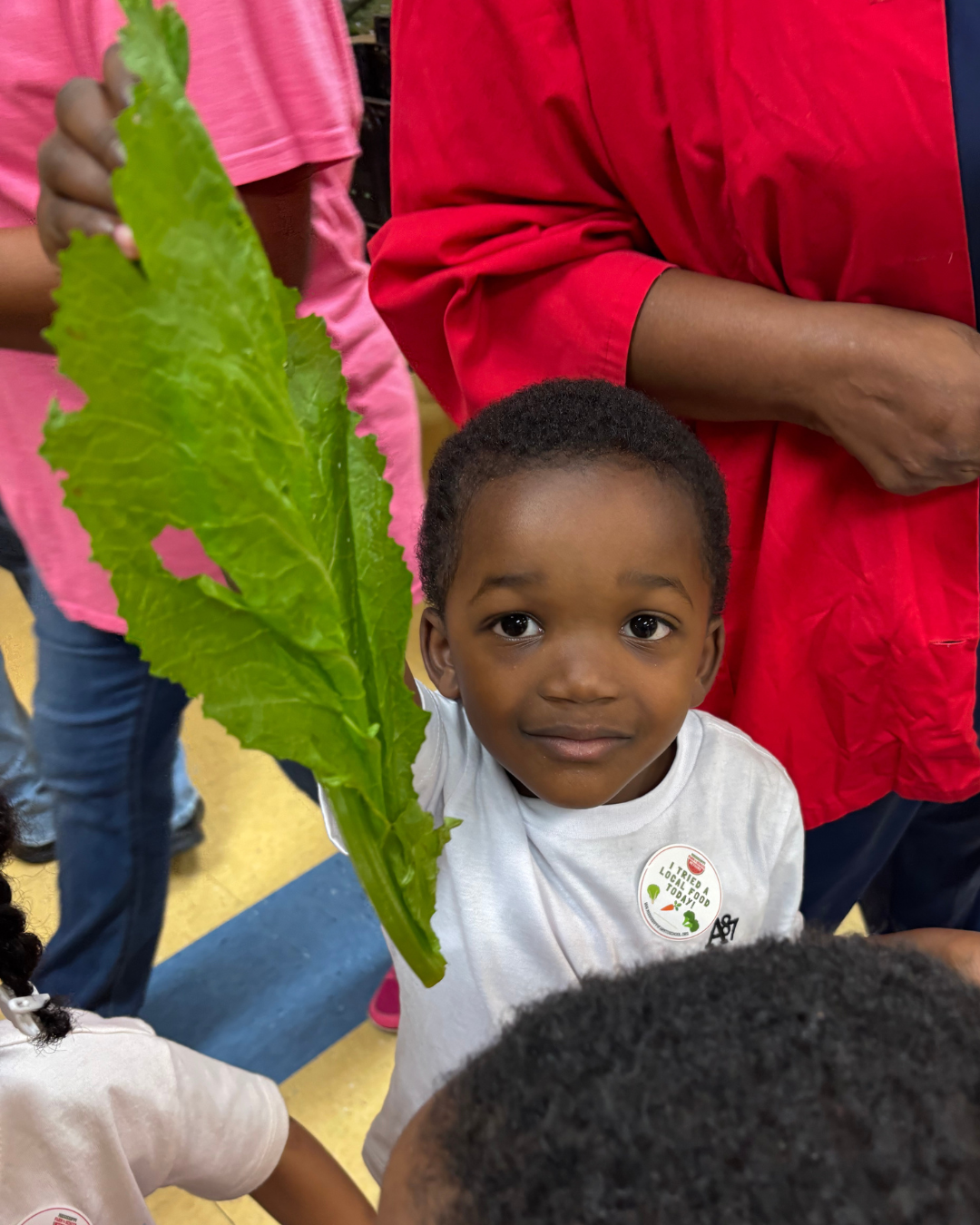
Nutrition and Agriculture Education- Children learn about healthy foods, where they come from, and how to try new fruits and vegetables through taste tests, classroom activities, and family events.
Local Food Procurement- Early childhood programs serve fresh, local foods in meals and snacks, connecting kids with farmers and their community’s food system.
Gardening- Children plant, care for, and harvest fruits and vegetables, getting hands-on experience that builds curiosity, responsibility, and a love for fresh food.
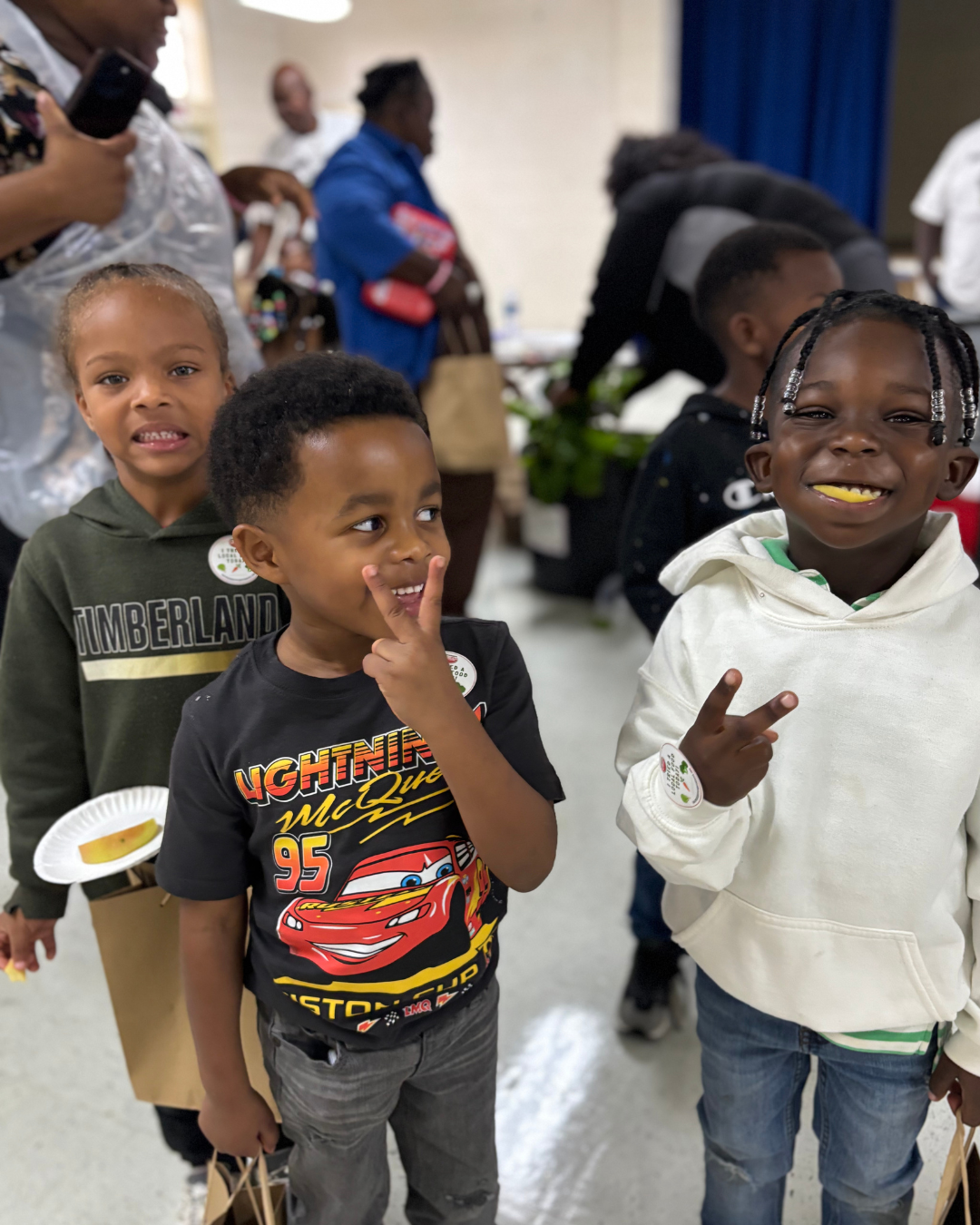
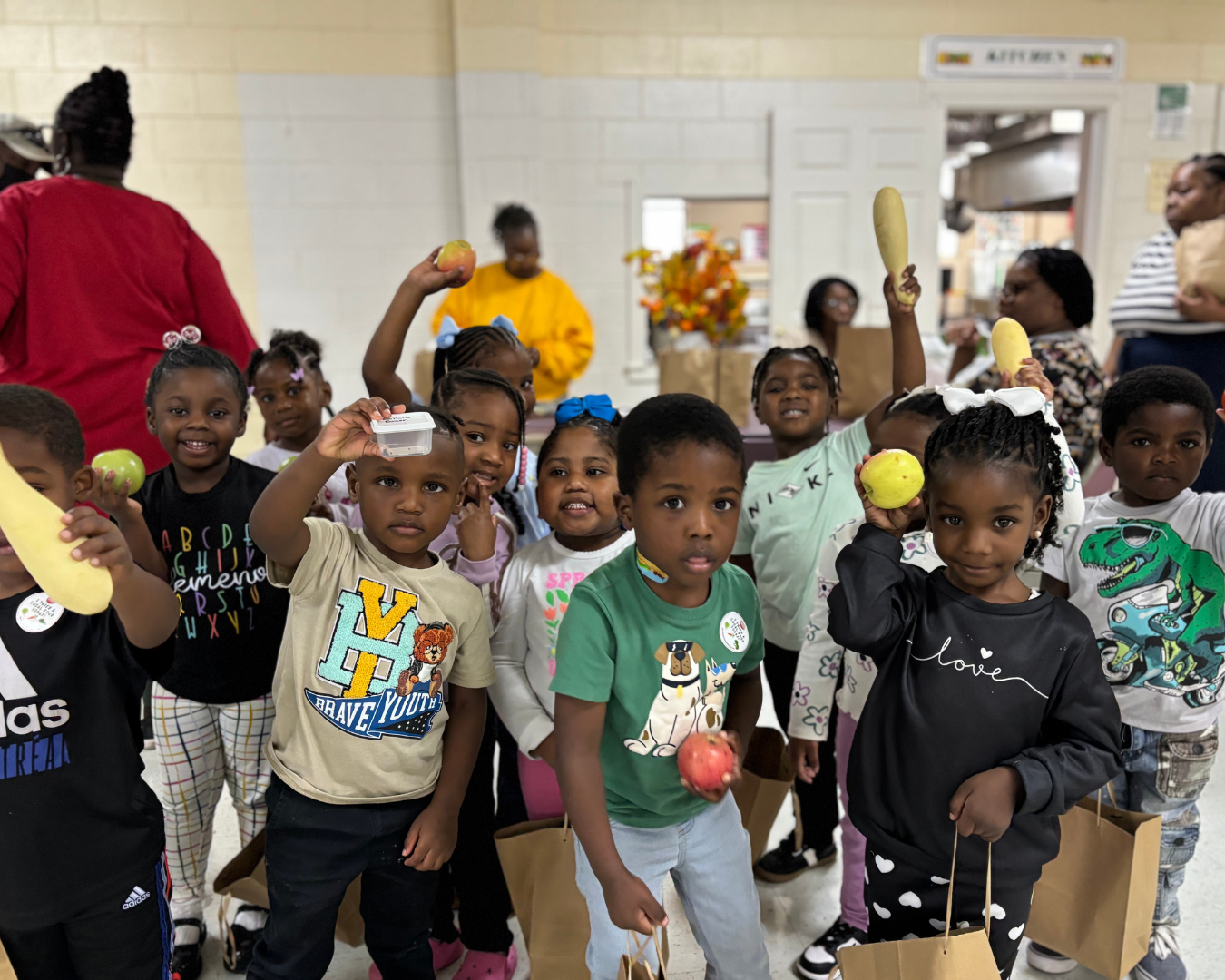
These experiences help kids grow healthy habits and feel excited and confident about trying new foods. Through Mississippi Sprouts, these activities reached over 3,100 children across 31 early childhood centers throughout North Mississippi and the Mississippi Delta. Teachers gained new skills, families got involved in gardens and taste tests, farmers cultivated relationships with new customers, and children were exposed to fresh, local foods they might never have tried before.
Growing Through Partnerships
Mississippi Sprouts worked through strong partners, including Crenshaw and West Tallahatchie Head Start programs, operated by the Institute of Community Services, Head Start Office (ICS), Choctaw Fresh Produce, a Choctaw-operated farm, and the eight Head Start programs operated by the Mississippi Band of Choctaw Indians Department of Early Childhood (MBCI ECE). By collaborating with these networks, resources and knowledge could spread widely, not just stay at one site.
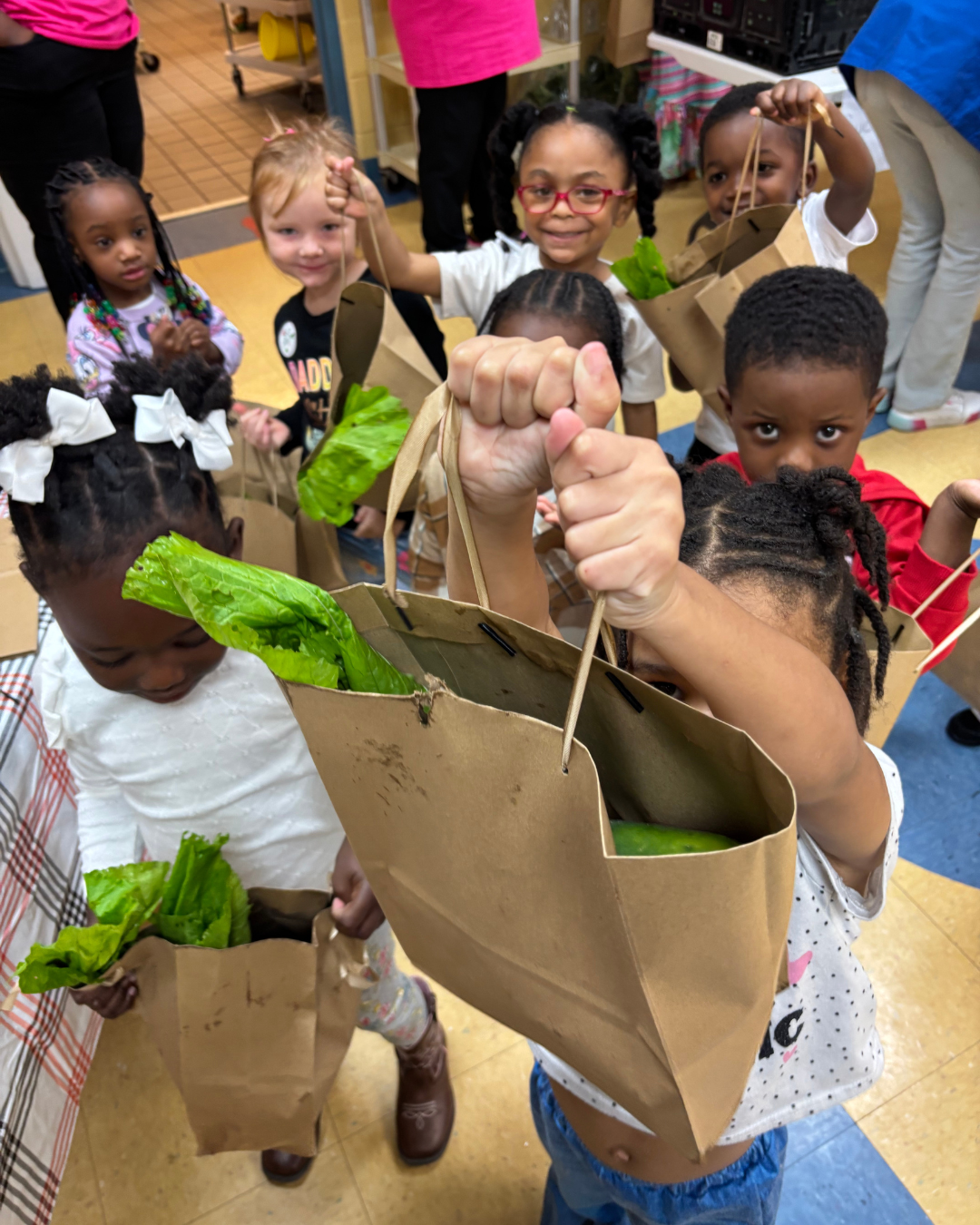
Local farmers were a key part of the work. Choctaw Fresh Produce, a tribally owned farm, delivered fresh, local food to MBCI ECE nutrition staff once weekly. The farm provided locally grown produce that was incorporated into student meals and family take-home bags, helping children taste and explore new foods while supporting local agriculture. These partnerships provided more than food: they brought local knowledge, trust, and real-world connections into classrooms.
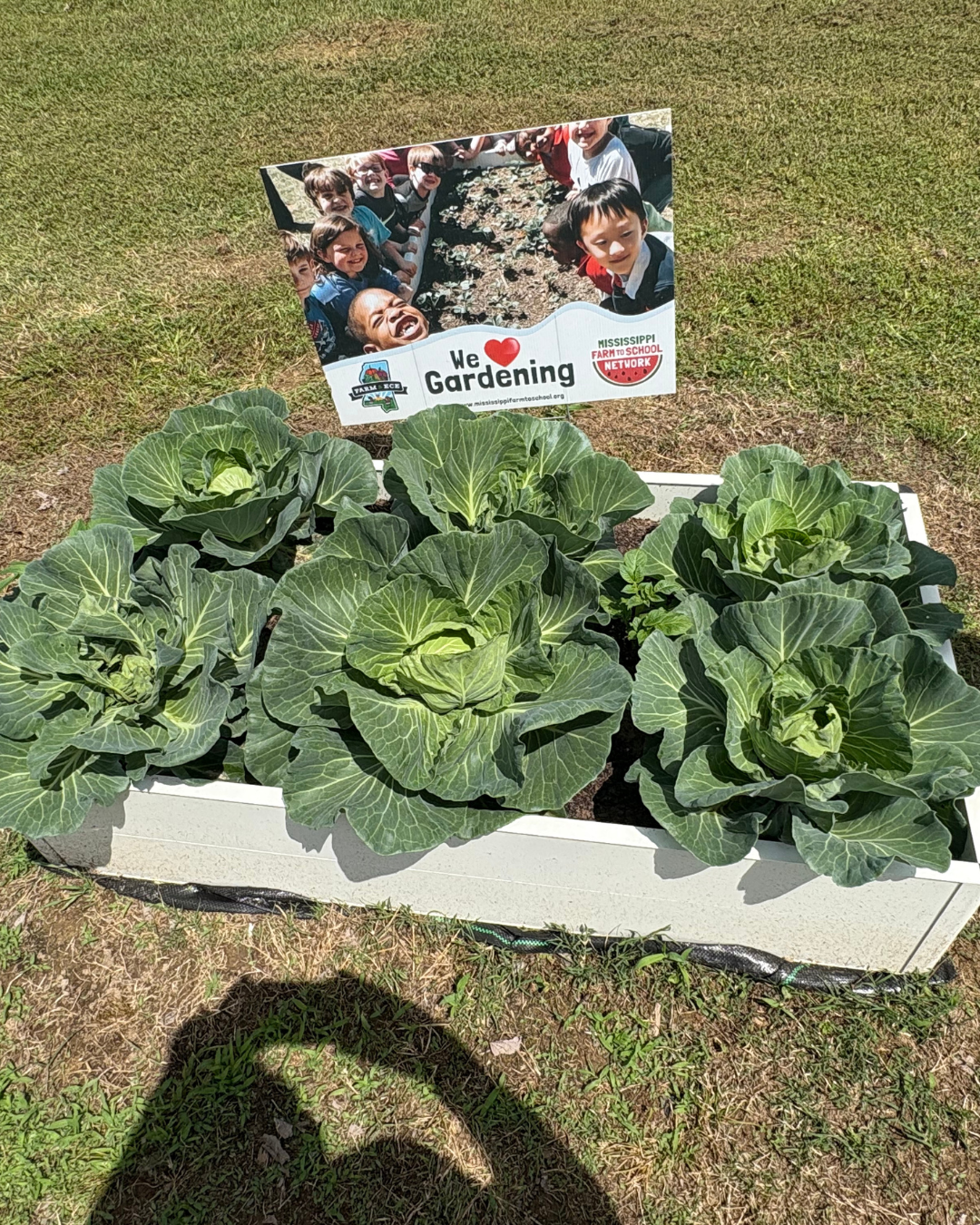
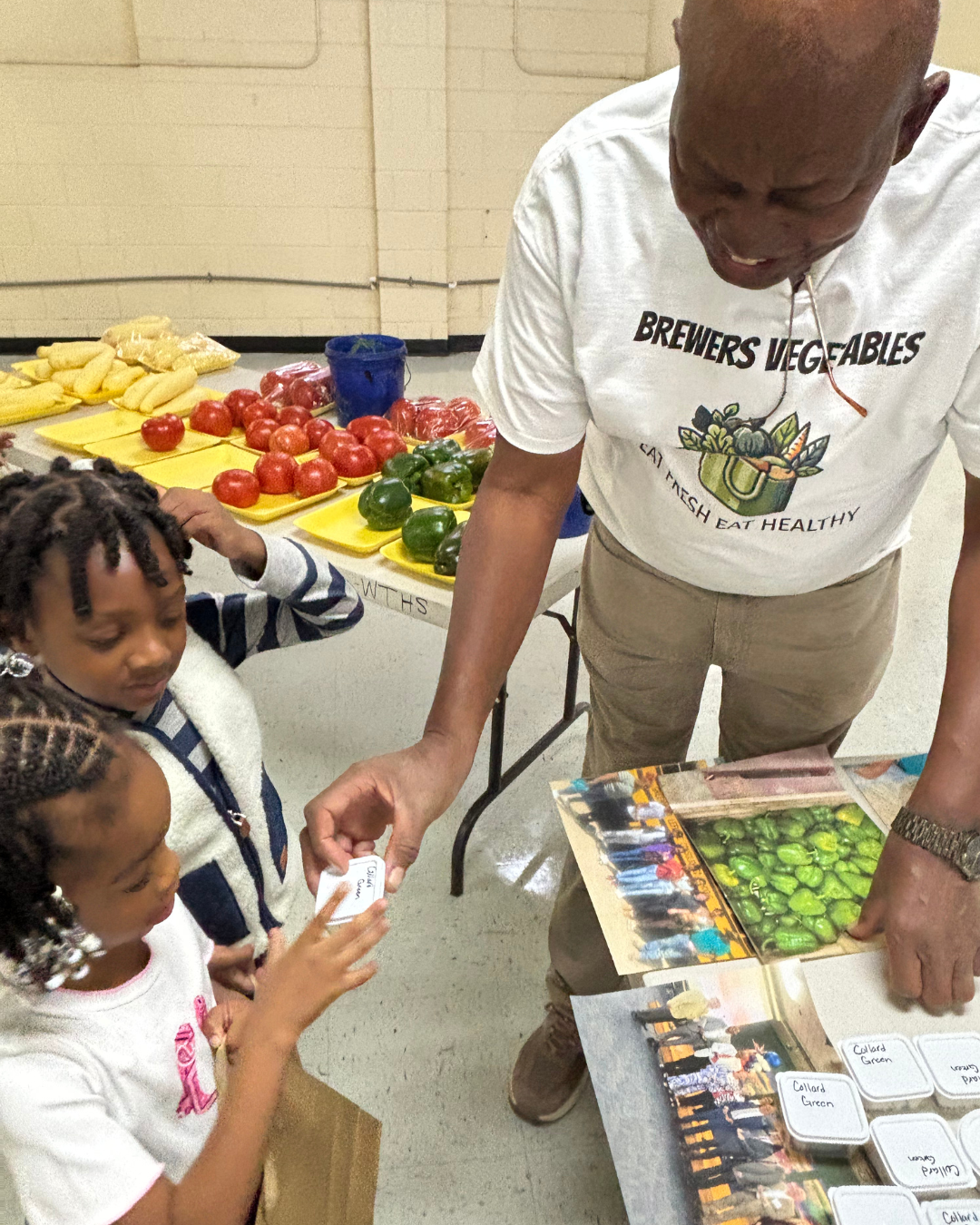
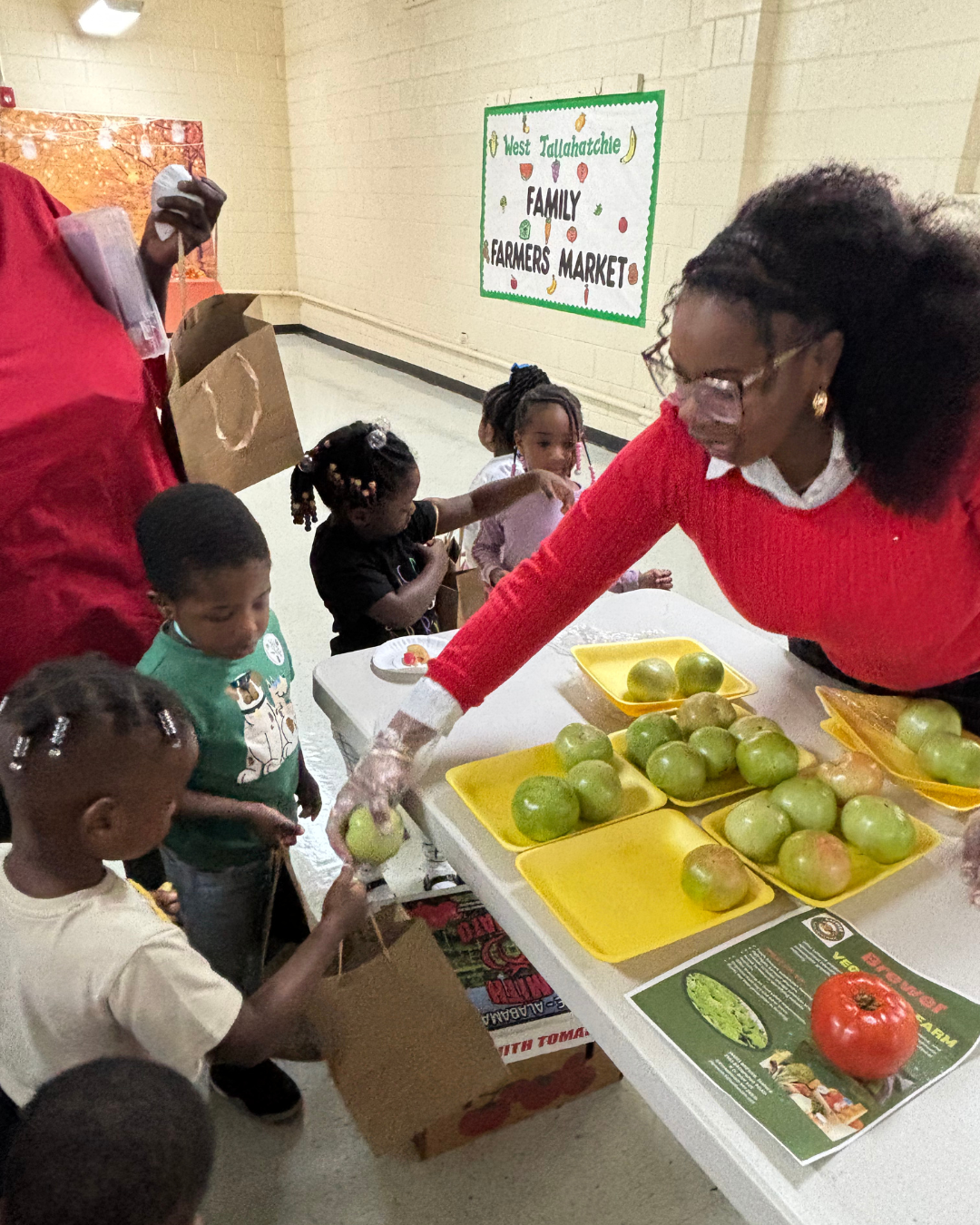
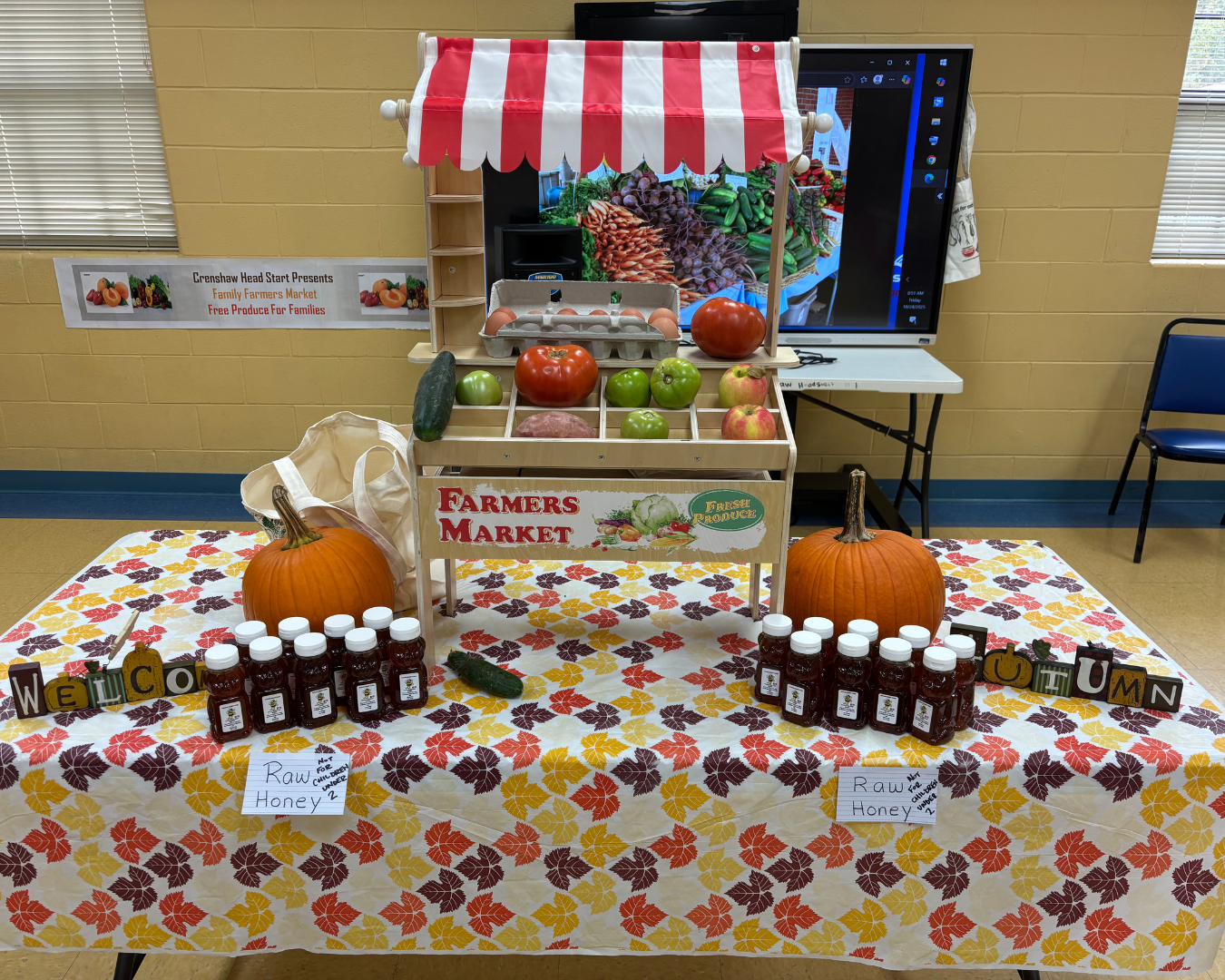
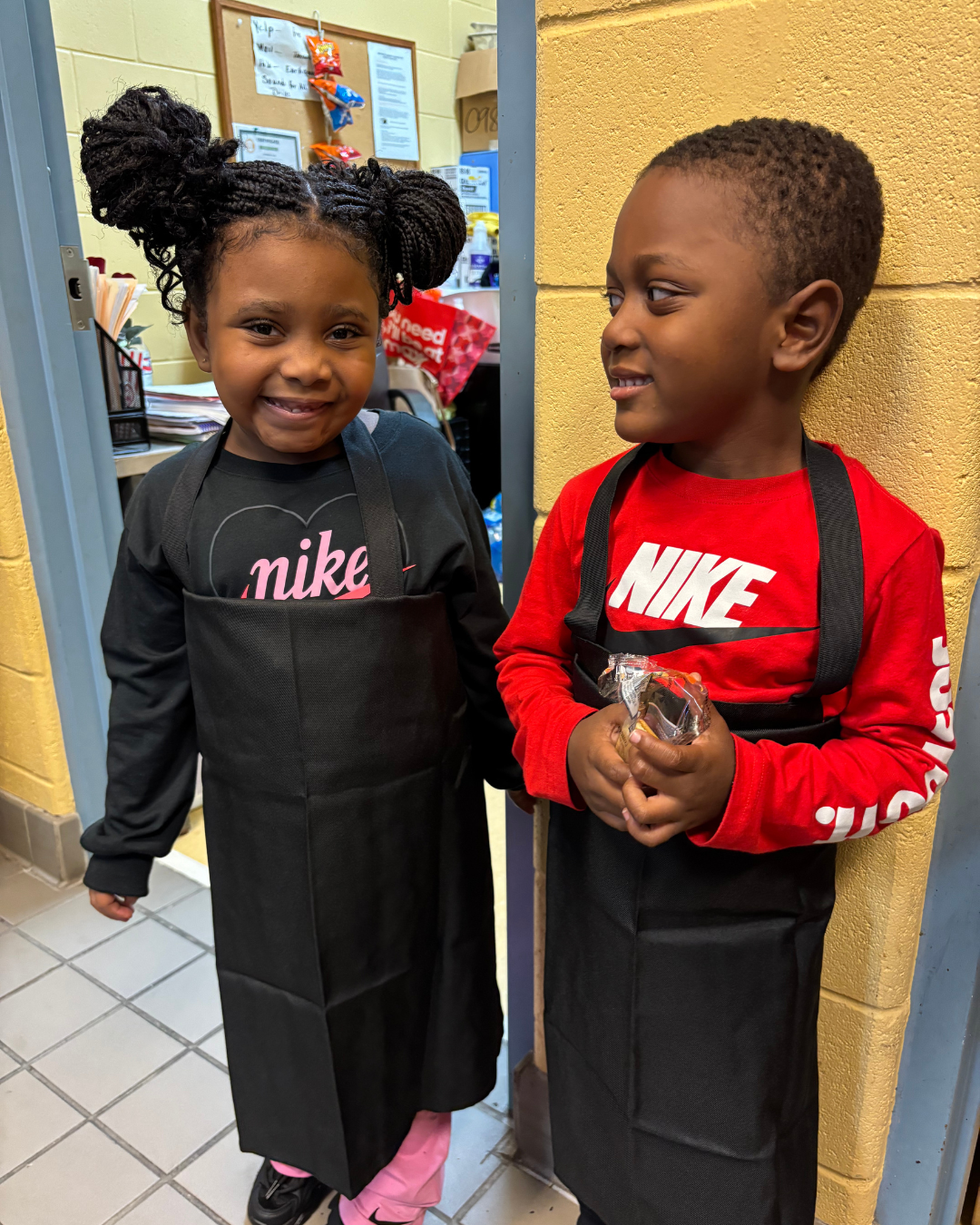
Gardens at Crenshaw and West Tallahatchie Head Starts became spaces of excitement and pride. Families joined planting days, staff took ownership of garden care, and children eagerly watered plants and watched them grow. As one educator shared, “The kids love watering the plants; they run to the garden when they go outside.” Both Crenshaw and West Tallahatchie hosted end-of-project Family Farmers Markets, where local farms provided fresh local produce for students and families to browse and take home, free of charge.
Educators also learned alongside one another at virtual and in-person training events. At a Farm to ECE gathering at the Institute of Community Services, Head Start Office, 60 ECE providers came together to taste local foods, learn and share ideas, and build confidence. Many left ready to bring Farm to ECE into their classrooms in new ways.
Seeing the Ripple Effect
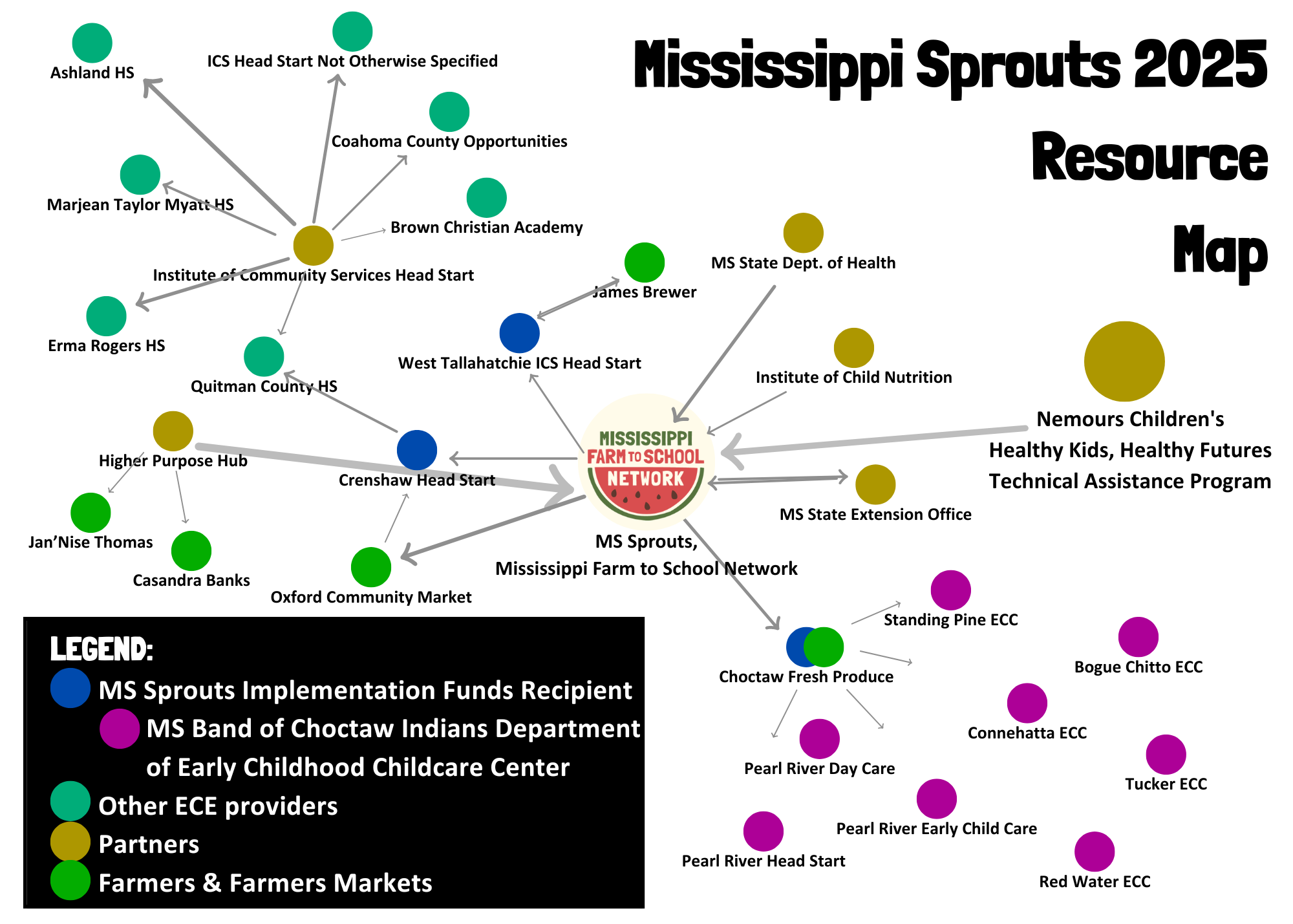
One of the biggest lessons learned through Mississippi Sprouts was how powerful community collaboration can be. Support that started at just one Head Start site didn’t stay there; it spread to 20 or more additional centers.
“We started with just a few centers, but the work spread much farther than we expected.”
The ripple effect is shown in the Mississippi Sprouts 2025 Resource Map, which shows how Mississippi Sprouts links early childhood centers, local food producers, and partner organizations across the state, creating a network that spreads resources, knowledge, and support to build a stronger, more equitable Farm to ECE system.
What’s Next?
Mississippi Sprouts showed that Farm to ECE grows best when it is built through relationships and local leadership. Next steps include strengthening partnerships, refining tools into a unified Farm to ECE Toolkit, developing a state-level Farm to ECE badge program to recognize ECE sites that showcase outstanding work in each of the three pillars, and keeping track of outcomes in a simple way, all aimed at helping more children experience gardens, local food, and healthy learning.
The lessons learned from this pilot provide a clear roadmap for scaling Farm to ECE across Mississippi, informing future funding, policy, and sustainability efforts that can bring local food systems into the everyday lives of the state’s youngest learners and improve health outcomes for years to come.
HKHF TAP Acknowledgement Statement:
Nemours Children’s Healthy Kids, Healthy Future Technical Assistance Program is funded through a subaward agreement with the Association of State Public Health Nutritionists, the funding for which comes from the Division of Nutrition, Physical Activity and Obesity (DNPAO) in the National Center for Chronic Disease Prevention and Health Promotion (NCCDPHP) at the Centers for Disease Control and Prevention (CDC) of the U.S. Department of Health and Human Services (HHS) as part of a financial assistance award (cooperative agreement number NU38PW000047-02-00) totaling $2,275,000, which funds several ASPHN and Nemours Children’s Health programs. This program is 100 percent funded by DNPAO/NCCDPHP/CDC/HHS. The contents are those of the author(s) and do not necessarily represent the official views of, nor an endorsement, by CDC/HHS, or the U.S. government.
For more information visit https://www.cdc.gov/nccdphp/divisions-offices/about-the-division-of-nutrition-physical-activity-and-obesity.html.